BioBand is a wearable sensor that connects to the Bio6 platform. It captures joint angles, movement symmetry, and muscle activation during rehabilitation — giving clinicians objective data instead of subjective observation.

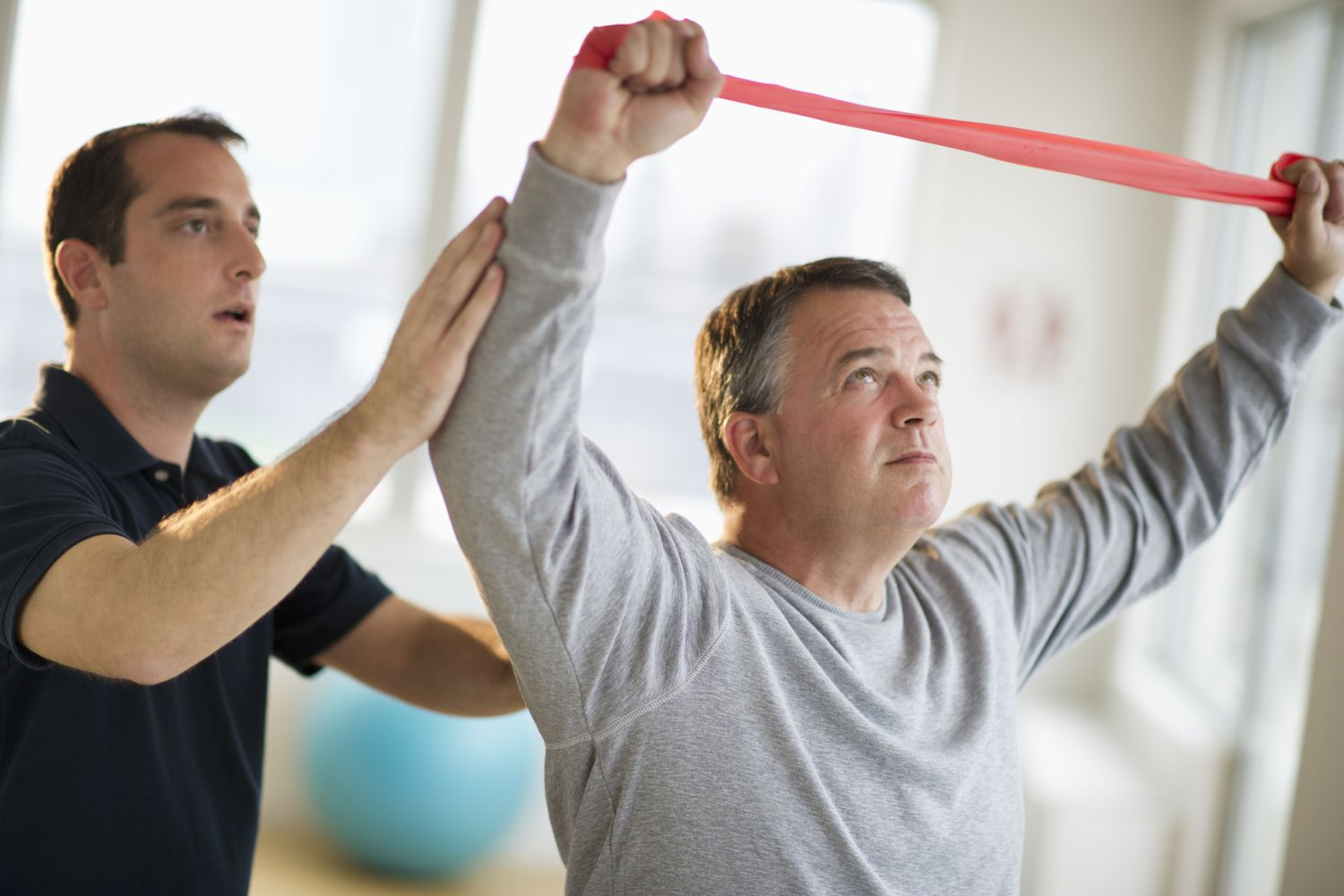
BioBand is placed on the patient by the clinician. It captures what matters — movement, symmetry, activation — and sends it directly to Bio6.
Designed to be worn during rehabilitation without restricting natural movement. Bluetooth connection — no cables, positioned by the clinician in seconds.
Records the full picture during actual exercises — range of motion, left-right symmetry, and neuromuscular recruitment. Objective data you can act on.
Data captured by BioBand is processed automatically by Bio6 and available instantly in the clinician dashboard — no manual entry, no delays.
From placement to clinical report in minutes — no manual data entry required.
The clinician positions BioBand on the relevant joint or limb segment in seconds.
BioBand records motion, muscle activation, and physiological signals during the session.
The platform converts raw sensor data into clinically meaningful metrics automatically.
Session reports and recovery trends appear instantly in the clinician dashboard.
The clinician positions BioBand on the relevant joint or limb segment in seconds.
BioBand records motion, muscle activation, and physiological signals during the session.
The platform converts raw sensor data into clinically meaningful metrics automatically.
Session reports and recovery trends appear instantly in the clinician dashboard.
Recovery timeline
8 weeksClinical decisions are often based on isolated snapshots taken every few weeks. Bio6 changes that by turning each assessment into structured, comparable data over time.
By connecting session data with optional between-session tracking, clinicians gain a clearer, more continuous view of patient recovery — not just performance on a single day.
Range of motion
Joint angle and movement arc across sessions.
Movement symmetry
Left-right balance during functional tasks.
Balance and stability
Postural control and sway metrics.
Muscle activation
Neuromuscular recruitment patterns and timing.
Movement quality
Coordination, control, and movement efficiency.
Recovery trends
Progress tracked across the full rehabilitation programme.
Marcus Reid, 26
Phase 3 — Return to Sport · Week 12 of 16
Metric
Clinician note
Quad LSI crossed the 90% threshold this session. Single-leg hop symmetry trending well — cleared for progressive plyometric loading.

2–3× more
Patient data points captured
Track patient progress continuously — not just during sessions — with structured data, adherence tracking, and optional movement analysis.
Based on replacing periodic in-clinic assessments (every 1–3 weeks) with ongoing tracking through patient-reported data, home programs, and optional sensor-based measurements.
Post-surgical rehab
Track recovery after joint surgery with objective movement benchmarks.
MSK rehabilitation
Measure functional mobility for musculoskeletal conditions.
Neurological rehab
Capture gait symmetry and balance in stroke and neurological recovery.
Sports performance
Analyse movement mechanics for return-to-sport decisions.
Occupational rehab
Assess functional movement capacity for return-to-work.
Clinical research
Standardised biomechanical data for trials and outcomes research.
Start a pilot and see how BioBand integrates with Bio6 to capture objective movement data during rehabilitation.